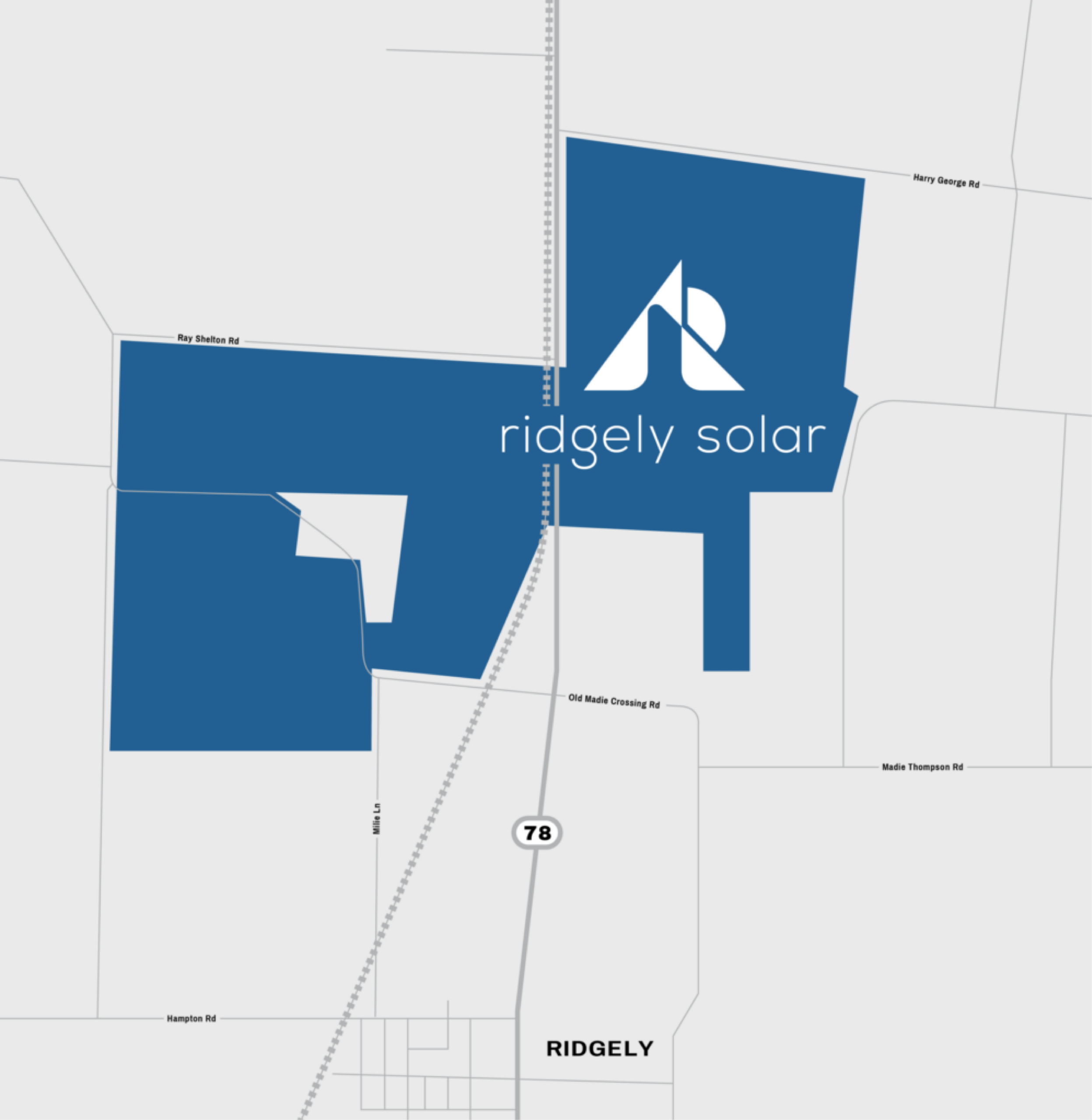
The facilities are located on approximately 1,300 acres along Harry George Road and Highway 78 in Lake County, TN, which is approximately 100 miles north of Memphis. Following construction, the facility will operate for 30+ years, providing significant economic investment to the community, substantial funding for the county and schools, and generating emission-free renewable energy.
Solar
Ridgely Solar
Lake County, TN
About
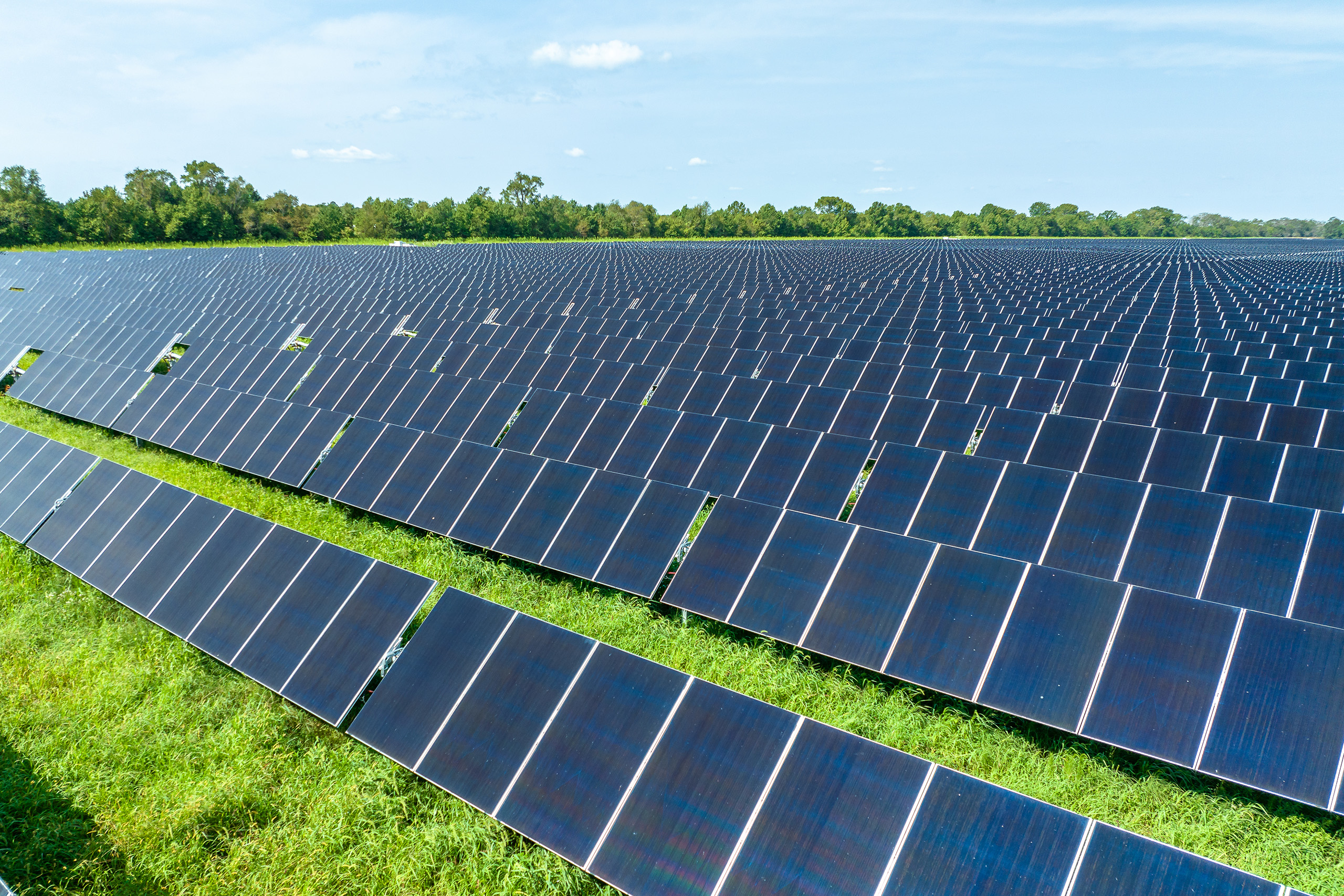
LRE subsidiary Ridgely Solar, LLC is a renewable energy facility, generating up to 177 megawatts (MW) of solar power generation in Lake County, TN.
Project Overview
0 MW
Renewable Energy Capacity
0 +
Year of Planned Operation
0 +
Jobs During Construction
0
Operational
Location
Resources
OUTREACH
Community Involvement
The Ridgely Solar Projects will be a power generation resource for 30 years or more, providing significant economic development and funding for local public services. LRE prioritizes responsibly sourced, U.S.-made components and local labor. The low-cost, emission-free power supply will help meet domestic energy needs.
As a dedicated member of the community, LRE will work hard to be a good neighbor. Our involvement goes beyond economic investment, job creation and providing emission-free energy. We strive to build lasting partnerships with local government, community organizations and individual neighbors. Throughout the life of the project, we pride ourselves on being open in our communication and responsive to feedback, and to ongoing community investment.
TIMELINE

Planning
2016
Construction
2024
Operational
2025ABOUT US
About LRE (Leeward Renewable Energy)
Founded in Texas in 2003, LRE (Leeward Renewable Energy) owns and operates 30+ wind, solar, and energy storage projects totaling over 4GW nationwide. LRE continues to help meet increased U.S. energy demand through our robust pipeline of new projects every year. We prioritize domestic jobs, local community partnerships, and protecting the land in our long-term approach to meet American energy needs. To learn more, visit www.lreus.com.
FAQ
Solar Frequently Asked Questions (FAQS)
What community impact can we expect from this project?
This project represents significant financial investment and will generate economic development and employment opportunities, as well as funding for public services through tax revenues. The majority of the job opportunities will be during the construction phase, which will contribute to an increase in purchases of local goods and services by the workforce. There will be an increase in traffic, water use to control dust, and noise onsite during certain periods of construction. Once operational, the site typically will have limited activity and require minimal public resources while generating a local source of emission-free energy.
What are the environmental impacts of the project?
The ultimate goal is to have a positive environmental impact overall. Both the project financing and permitting process include extensive reviews that reduce risks. LRE begins the development process with environmental studies to confirm site conditions. These studies inform project design and management plans for all aspects of the project. In addition, the industry is continually improving technology and management best practices. LRE has a company culture that focuses on reducing risks and increasing safety and is committed to being a good, long-term neighbor and contributor to the community.
Who will maintain the property and vegetation?
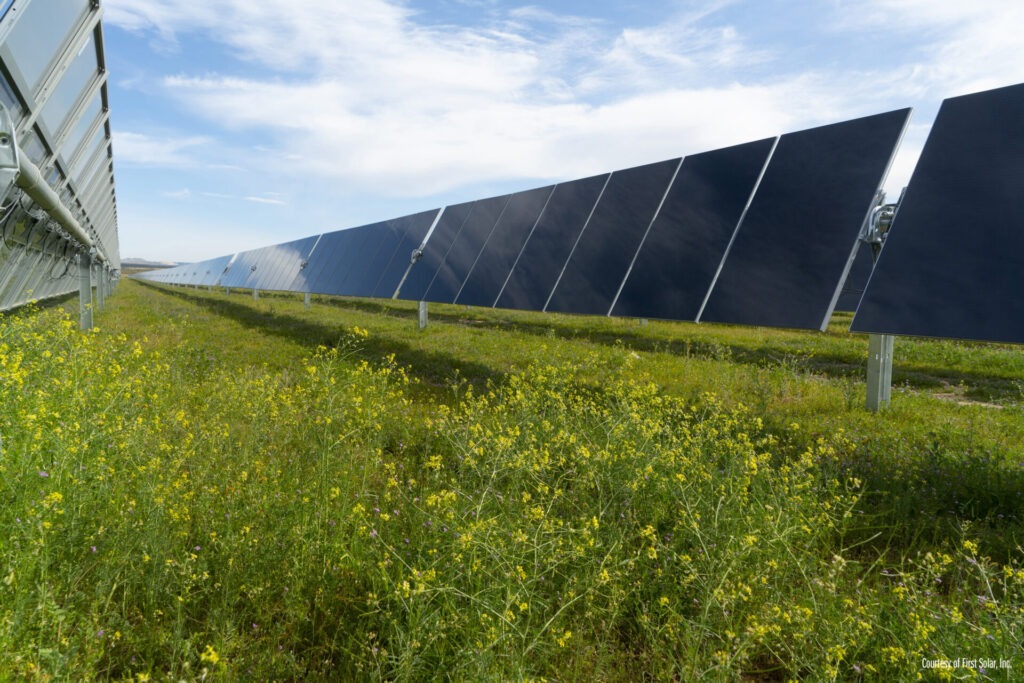
LRE will be responsible for maintaining the solar facility and property including access roads, buildings and energy infrastructure. We implement vegetation and biodiversity management practices to promote the establishment of native vegetation and reduce invasive plant species and typically include pollinator-friendly seed mixes. On some projects, we partner with shepherds to manage vegetation, while others use mechanical mowing to reduce fire and operations risk.
Will the solar facility produce glare or noise?
Solar panel technology has advanced significantly in recent years. LRE typically uses thin-film solar with tempered glass and anti-reflective coatings, minimizing glare. The moving mechanical parts of a solar facility produce minimal noise and are typically inaudible beyond the property boundaries based on the setbacks that are included in the facility’s design.
What are your plans to accommodate wildlife?
The project design will include several wildlife management features requested by local community members and in consultation with relevant authorities. In addition, LRE is committed to implementing land stewardship best practices with vegetation and biodiversity management plans.
How long will the solar facility be operational?
The average life of a solar facility is approximately 30 to 40 years, but with proper maintenance, it can last longer. Many projects may also be “repowered” to extend the productive life of the project. This includes upgrading existing components to improve performance or increase capacity, which requires additional reviews and permits. At the end of the life of the project, the Ridgely Solar project will be responsible for removing equipment and restoring the site.
CONTACT
Contact us
If you have additional questions about Ridgely Solar, please fill out the form or contact
Ridgely Solar Public Affairs
reports@syntrio.com
877-847-0828
"*" indicates required fields